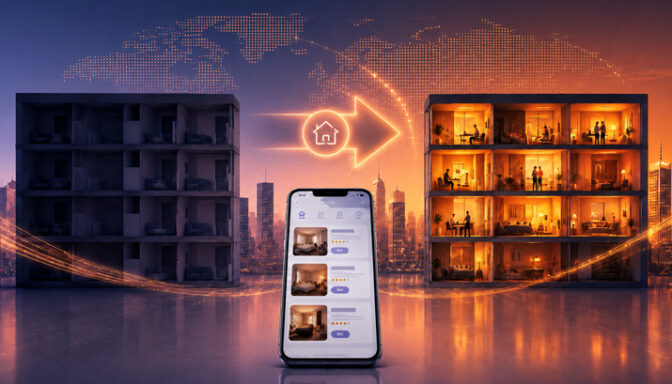
From OTA Dependence to the Era of Direct
Customer Acquisition and Repeat Guest Strategies.
Today, many vacation rental and hotel owners rely on OTAs (Online Travel Agencies) such as Airbnb, Booking.com, Agoda, and Expedia to attract guests.
Of course, OTAs are extremely convenient and provide access to a large customer base.
However, many properties have become overly dependent on OTA platforms.
For example,
- Heavy commission costs
- Properties are forced into price wars
- Repeat bookings are harder to generate
- Operations are affected by changes in OTA policies
- Potential account suspension risk
- High fees and competition reduce profit margins
While OTAs are undoubtedly powerful distribution channels, they also come with a number of challenges. So, how can vacation rental and hotel operators reduce their dependence on OTAs and build a more sustainable business model for the future?
Why Overdependence on OTAs Is Risky
OTAs provide powerful marketing reach and booking potential. However, relying entirely on third-party platforms for customer acquisition
can create significant business risk.
For example, changes to Airbnb’s ranking algorithm, declining review scores, account restrictions or suspensions, and increasing price competition can all have a major impact on booking performance from a single change in platform conditions.
In addition, OTA commission fees can place significant pressure on profitability. In many cases, after deducting OTA commissions, management fees, cleaning costs, and other operating expenses, owners find themselves in a situation where revenue is being generated, but very little profit remains. Simply lowering prices is not the solution. When occupancy begins to decline, many owners immediately turn to price reductions. However, competing on price alone often leads to lower profit margins, attracts highly price-sensitive guests, and can ultimately contribute to weaker review performance. In today’s vacation rental market, being the cheapest option is no longer enough to stand out.
The Real Competitive Advantage Is Building Direct Relationships with Guests
In the years ahead, one of the most important factors for success will be building direct relationships with guests.
For example,
- Increasing Repeat Bookings
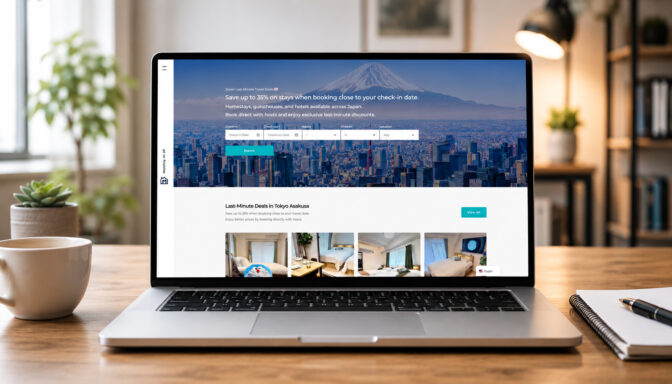
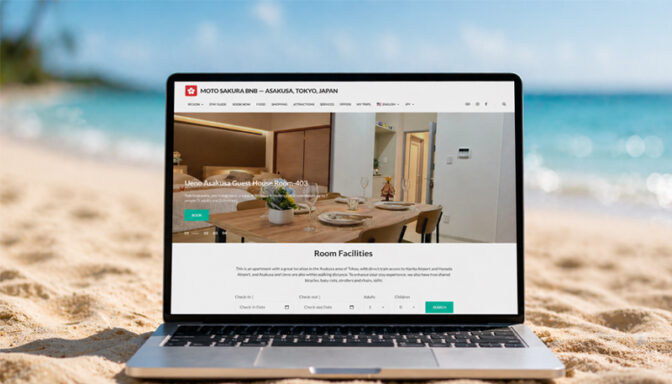
- Official Website Reservations
- Social Media Marketing
- LINE, WeChat, and WhatsApp Communication Channels
- Branding Your Property
For this reason, it is essential to build a booking ecosystem that generates reservations beyond OTA platforms.
Repeat guests are one of the most valuable assets a hospitality business can have.
Properties with strong profitability often have a loyal base of repeat guests.
When guests leave thinking, “I’d like to stay here again,” “I’d recommend this property to my friends,” or “Next time I’d like to book directly,”
the business becomes less dependent on OTA commissions and moves toward a more sustainable and profitable operating model.
Properties that consistently generate direct bookings tend to share one important characteristic: they create memorable guest experiences. Whether through clear communication, exceptional cleanliness, strong review ratings, multilingual support, trust and reassurance from the host, or opportunities to experience Japanese culture, these properties offer more than just a place to stay. They deliver a genuine experience. When guests remember their stay for the right reasons, they are far more likely to return, recommend the property to friends and family, and choose to book directly in the future.
MOTO SMART’s “Management 2.0”
At MOTO SMART, we believe hospitality businesses should be more than simply operating through OTA listings. That is why we have developed a new operational approach called “Management 2.0.”
By leveraging AI-powered tools, IoT technologies, operational support hosts, direct booking channels, and guest retention strategies, we help owners build a business model that is designed to reduce dependence on OTA platforms.
From Invisible Operations to Visible Operations
Under traditional outsourced management models, owners often had limited visibility into guest data, repeat guest activity, operational improvement opportunities, and review analytics. With Management 2.0, however, owners gain access to valuable insights such as revenue performance, guest reviews, customer feedback, and repeat booking trends. As a result, they are able to understand why bookings are generated and make more informed decisions to continuously improve business performance.
Reducing OTA Dependence Can Transform Profitability By reducing reliance on OTA platforms, owners can significantly improve their profit margins. More importantly, the focus shifts away from competing on price and toward becoming a property that guests actively choose. Rather than supporting an OTA-dependent operating model, MOTO SMART helps owners build a more sustainable hospitality business through self-management strategies that create long-term value and profitability.